
NEWS
2026-06-15
Truck blind spots remain a persistent safety challenge in long-haul transportation. Due to the size and structure of commercial vehicles, certain areas around the truck cannot be directly seen by the driver.
● Large trucks naturally have blind zones along the sides and rear of the vehicle
● Many lane-change and merging accidents are linked to limited driver visibility
● Traditional mirrors cannot fully cover all critical areas around the truck
As traffic environments become more complex, improving blind spot visibility remains a key priority for truck safety.
Truck blind spots can lead to several serious accident types that directly impact road safety and fleet operations.
● Lane-Change Collisions
● Side-Swipe Accidents
● Wide-Turn Accidents
● Pedestrian and Cyclist Collisions
● Property Damage and Insurance Claims
Traditional mirrors help drivers monitor surrounding traffic, but they also have several limitations that affect visibility and safety.
● Dependence on Ambient Light
● Rain, Snow, and Dirt Affect Reflection
● Headlight Glare at Night
● Structural Blind Spots Remain
● Limited Human Observation Capability
To address these challenges, STONKAM Truck MirrorCam System provides an alternative approach to vehicle visibility and blind spot management.
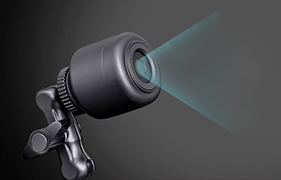
STONKAM Truck MirrorCam System (CMS) is a camera-based visibility solution designed to improve truck driver visibility and address blind spot challenges. By replacing traditional mirrors with cameras and in-cab displays, it provides a wider and clearer view around the vehicle.
The system helps drivers better monitor surrounding traffic during lane changes, turning, and other high-risk maneuvers, reducing the likelihood of blind spot-related collisions.
STONKAM mirrorcam system is the vehicle camera monitor solution designed for trucks to improve indirect vision performance and reduce blind spot-related risks.
STONKAM Class II & IV CMS has obtained UN ECE R46 certification, while Class V & VI CMS complies with the regulation's indirect vision requirements, providing reliable visibility support for commercial trucks.
● Class II & IV Cameras: monitor critical side and rear blind spot areas, helping reduce collision and scraping risks during low-speed driving, turning, U-turns, and operation on narrow roads.
● Class V & VI Cameras: monitor critical front and front-side areas, improving visibility during lane changes, turning maneuvers, and vehicle start-up operations.
Compared with traditional mirrors, the mirrorcam system provides a wider field of view and better awareness of surrounding traffic, helping drivers identify potential hazards earlier.
Designed for long-haul trucks operations, STONKAM truck mirrorcam system maintains clear visibility in various weather and lighting conditions.
Key Features:
● WDR technology for glare reduction and enhanced night vision
● High-brightness IPS displays for clear viewing in sunlight
● IP69K-rated cameras for harsh environments
● Automatic heating, defogging, and self-cleaning lenses
● Automatic brightness adjustment and folding functions
These features help ensure stable visibility in rain, fog, tunnels, nighttime driving, and strong backlight conditions.
For truck fleets operating in domestic and international markets, regulatory compliance is becoming increasingly important.
STONKAM MirrorCam System complies with major industry standards and regulations, including:
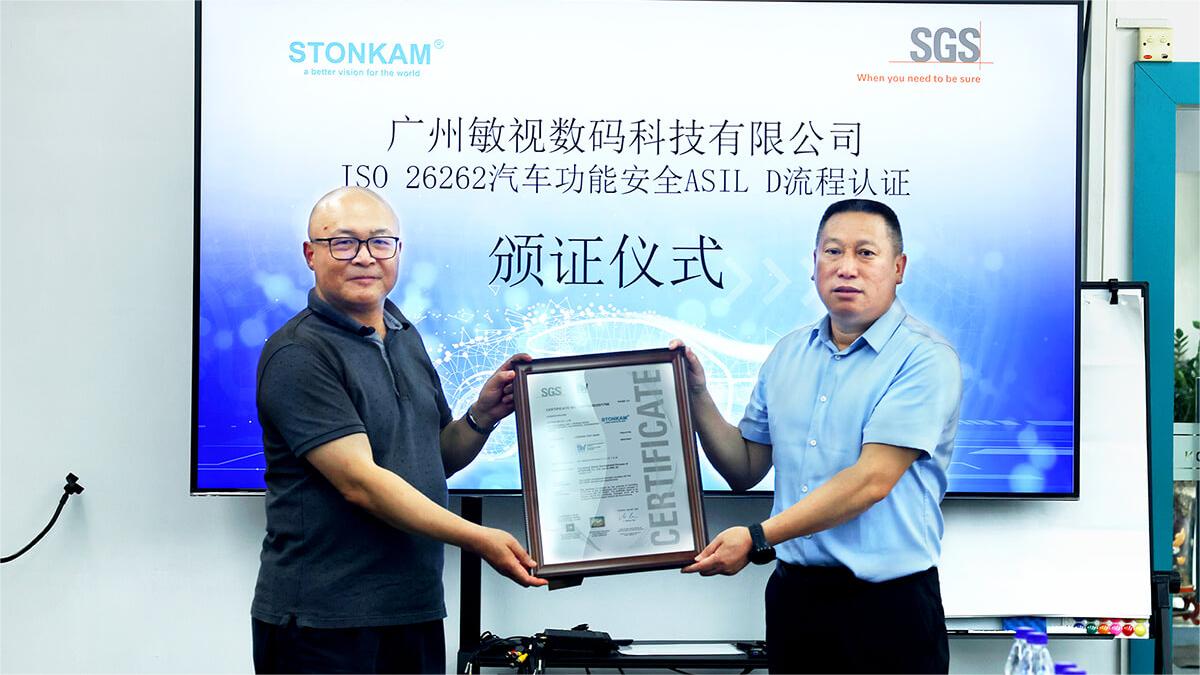
● ISO 26262
● UN ECE R46
● UN ECE R151/159
These certifications help fleets meet vehicle safety requirements while supporting OEM integration and international market applications.
After deploying STONKAM truck mirrorcam system, fleets often experience noticeable improvements in blind spot management and driver awareness.
● Fewer Blind Spot-Related Collisions
Improved side and rear visibility allows drivers to identify potential hazards earlier, helping reduce accidents caused by blind spots.
● More Accurate Judgment During Lane Changes and Overtaking
Drivers gain a clearer understanding of surrounding vehicle positions, resulting in safer lane-change, overtaking, and turning maneuvers.
● Reduced Collision Risks with Pedestrians and Cyclists
Improved visibility of vulnerable road users helps drivers detect pedestrians and cyclists earlier, reducing collision risks in urban logistics and delivery operations.
● Greater Driver Confidence
With more complete visual coverage around the truck, drivers can make decisions with greater confidence in complex traffic situations.
Truck fleets should consider upgrading when they face one or more of the following challenges:
● Vehicles experiencing repeated blind spot-related safety incidents or insurance claims
● Fleets operating in dense urban environments with high pedestrian exposure
● Mixed logistics operations requiring standardized visibility systems across fleet vehicles
● Operations involving frequent long-distance highway transportation
● Companies requiring compliance with advanced vehicle safety regulations
As fleet safety requirements continue to evolve, upgrading from traditional mirrors to STONKAM vehicle camera monitor system becomes an increasingly practical investment.
Q1:Is the Truck MirrorCam system better than mirrors for night driving?
Yes. STONAKM MirrorCam systems utilize WDR technology, image enhancement, and high-brightness displays to provide clearer visibility under low-light and nighttime conditions than conventional mirrors.
Q2:Can STONKAM Truck MirrorCam system help improve visibility in rain and fog?
Yes. Features such as IP69K-rated cameras, automatic heating, defogging, and self-cleaning functions help maintain clear visibility in adverse weather conditions.
Q3:Are AI functions supported in STONKAM Truck MirrorCam System?
Yes. Depending on configuration requirements, STONKAM solutions can support AI capabilities such as pedestrian detection, vehicle detection, lane change warning, BSD, ADAS, and other intelligent safety functions.
Q4:Can existing trucks be upgraded with STONKAM Truck MirrorCam System?
Yes. It supports both OEM integration and aftermarket retrofit projects, making the system suitable for new vehicles and existing truck fleets.
Q5:How is STONKAM MirrorCam system different from traditional mirrors?
Traditional mirrors rely on reflected light and have fixed viewing angles. STONKAM mirrorcam system uses cameras and displays to provide a wider, clearer, and more stable field of view, helping drivers reduce blind spots and improve overall driving safety.
STONKAM CO., LTD
Add: 1/F.,#6Building,Huangzhou Industrial Park, Chebei Rd.,Tianhe,510660 Guangzhou,China
Tel: (86-20)6667 0988
Fax: (86-20)6667 0977
E-mail: sales@stonkam.com
WhatsApp: +86-15521270579; +86-15708917305

Copyright ©2002-2022 STONKAM CO.,LTD. 广州敏视数码科技有限公司 ALL Rights Reserved. 广东省通信管理局 粤ICP备05043268号





 AI intelligent systems
  AIoT
AIoT  360° Vision Systems
  Intelligent Terminal
  HD Monitors
  AHD Cameras
  Digital Cameras
  CMS
CMS  AI Wireless
  Regulations
  Thermal Cameras
  OEM Solutions
  Industry Applications
 Successful Case
  News
News
 Videos Center
 Introduction
  Why STONKAM®
  Culture
  Milestone
  Certificates
  Contact Us
 Support