
NEWS
2024-11-15
An IP Camera (Internet Protocol Camera) is a digital camera that transmits video data over a network rather than through analog cables. Unlike traditional CCTV, an IP Camera sends images directly through IP-based protocols, enabling remote access, cloud storage, and intelligent video management.
These in-vehicle IP cameras are widely used in:
●Agricultural machinery
●Construction vehicles
●Passenger transportation
●Logistics and fleet management
While IP Camera technology is powerful, B2B in-vehicle systems face unique challenges:
1、Protocol incompatibility
Many IP Cameras support networks, but inconsistent standards prevent smooth data sharing between cameras, MDVRs, and monitoring platforms.
2、Data latency and operational risk
Delayed video transmission reduces emergency response speed and weakens safety control.
3、Installation complexity
Limited vehicle space and complex wiring make bulky or rigid cameras unsuitable.
A professional Vehicle IP Camera must include:
●Multi-protocol compatibility (ONVIF, RTSP, HTTP)
●Compact structure for tight vehicle spaces
●High-definition imaging for clear evidence and AI processing
These features allow the IP Camera to integrate smoothly into fleet surveillance systems.
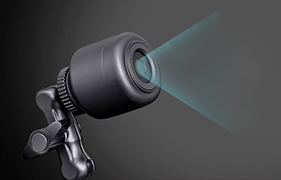
STONKAM in-vehicle cameras are engineered for small mounting spaces while maintaining industrial reliability.
STONKAM IP Cameras support ONVIF, RTSP, and HTTP, allowing them to connect seamlessly with MDVRs, backend platforms, and monitoring centers.
Multi-protocol support enables real-time communication between Vehicle IP Cameras, dispatch systems, and cloud platforms.
STONKAM Vehicle Network Surveillance Cameras reduce integration complexity, minimize downtime, and improve system responsiveness.
A purpose-built Vehicle IP Camera is essential for building a reliable, scalable vehicle monitoring system. With strong protocol compatibility, compact design, and HD video output, STONKAM IP Cameras ensure stable data flow, fast response, and long-term system reliability.
A Vehicle IP Camera is an IP-based camera designed for in-vehicle environments, supporting vibration resistance, compact installation, and network video transmission.
An IP Camera uses digital network protocols, while CCTV uses analog signals. IP Cameras support remote access, higher resolution, and system integration.
Protocol compatibility ensures IP Cameras can communicate with MDVRs, backend systems, and monitoring platforms without data loss or delays.
STONKAM CO., LTD
Add: 1/F.,#6Building,Huangzhou Industrial Park, Chebei Rd.,Tianhe,510660 Guangzhou,China
Tel: (86-20)6667 0988
Fax: (86-20)6667 0977
E-mail: sales@stonkam.com
WhatsApp: +86-15521270579; +86-15708917305

Copyright ©2002-2022 STONKAM CO.,LTD. 广州敏视数码科技有限公司 ALL Rights Reserved. 广东省通信管理局 粤ICP备05043268号





 AI intelligent systems
  AIoT
AIoT  360° Vision Systems
  Intelligent Terminal
  HD Monitors
  AHD Cameras
  Digital Cameras
  CMS
CMS  AI Wireless
  Regulations
  Thermal Cameras
  OEM Solutions
  Industry Applications
 Successful Case
  News
News
 Videos Center
 Introduction
  Why STONKAM®
  Culture
  Milestone
  Certificates
  Contact Us
 Support