
NEWS
2025-01-17
A vehicle camera is primarily responsible for image acquisition, providing visual monitoring to support basic driver visibility. In traditional vehicle monitoring systems, cameras function as passive tools, relying heavily on human judgment.
However, as vehicle applications expand into logistics transportation, construction machinery, emergency rescue, and intelligent driving assistance, traditional vehicle cameras can no longer meet modern safety requirements.
This has driven the evolution toward AI vehicle camera technology, integrating intelligent perception, real-time analysis, and active safety warnings.
Ordinary vehicle cameras rely entirely on drivers to interpret video feeds. In blind spot areas, pedestrians or other vehicles may not be detected in time.
This dependence on manual judgment:
●Increases driver workload
●Raises the risk of missed hazards
●Reduces response speed in emergencies
Compared with conventional cameras, an AI vehicle camera combines:
●Artificial intelligence algorithms
●Pedestrian & vehicle detection
●Blind spot forewarning
●Active safety warning mechanisms
These capabilities transform vehicle cameras from passive observers into active safety assistants.
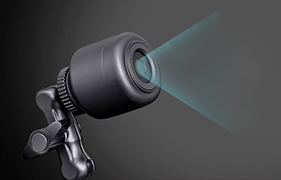
The STONKAM AI vehicle camera applies deep learning algorithms to enable high-precision pedestrian and vehicle detection.
By continuously analyzing the environment around the vehicle, the AI vehicle camera:
●Identifies pedestrians and vehicles in blind spots
●Detects potential collision risks in real time
●Reduces safety hazards caused by limited visibility
This makes it ideal for commercial vehicles, construction machinery, and logistics fleets.
Unlike standard vehicle cameras that only provide visual feedback, AI vehicle cameras support real-time active safety warnings.
STONKAM AI vehicle camera outputs alarm signals that can connect to:
●In-vehicle displays
●External speakers
●Car MDVR systems
When pedestrians or vehicles are detected within dangerous zones, the system automatically triggers visual and audio alerts, allowing drivers to respond immediately.
AI vehicle cameras are widely used in:
●Logistics transportation fleets
●Construction and engineering machinery
●Emergency rescue vehicles
●Intelligent driving assistance systems
By integrating AI Pedestrian & Vehicle Detection Camera, Blind Spot Forewarning, and car MDVR, AI vehicle camera solutions significantly improve operational safety and efficiency.
The evolution from traditional vehicle cameras to AI vehicle camera systems represents a major step forward in vehicle safety technology.
With intelligent detection, real-time active warnings, and blind spot forewarning, STONKAM AI vehicle camera empowers drivers to respond faster, reduces accident risks, and lowers operational costs for enterprises.
Traditional vehicle cameras only provide passive video, relying on drivers to judge risks. They cannot identify pedestrians or vehicles in blind spots or issue automatic warnings, which limits safety in complex environments.
An AI vehicle camera actively detects pedestrians and vehicles, provides blind spot forewarning, and triggers real-time alerts, turning the camera from a simple viewing tool into an intelligent safety assistant.
AI vehicle cameras analyze blind spot areas in real time and issue alerts when pedestrians or vehicles are detected.
Yes. AI vehicle cameras can integrate with car MDVR systems for centralized video recording and fleet management.
STONKAM CO., LTD
Add: 1/F.,#6Building,Huangzhou Industrial Park, Chebei Rd.,Tianhe,510660 Guangzhou,China
Tel: (86-20)6667 0988
Fax: (86-20)6667 0977
E-mail: sales@stonkam.com
WhatsApp: +86-15521270579; +86-15708917305

Copyright ©2002-2022 STONKAM CO.,LTD. 广州敏视数码科技有限公司 ALL Rights Reserved. 广东省通信管理局 粤ICP备05043268号





 AI intelligent systems
  AIoT
AIoT  360° Vision Systems
  Intelligent Terminal
  HD Monitors
  AHD Cameras
  Digital Cameras
  CMS
CMS  AI Wireless
  Regulations
  Thermal Cameras
  OEM Solutions
  Industry Applications
 Successful Case
  News
News
 Videos Center
 Introduction
  Why STONKAM®
  Culture
  Milestone
  Certificates
  Contact Us
 Support