4CH vs. 6CH vs. 8CH AI MDVR: How to Choose the Right System

What Is an AI MDVR for Commercial Vehicle Fleets?
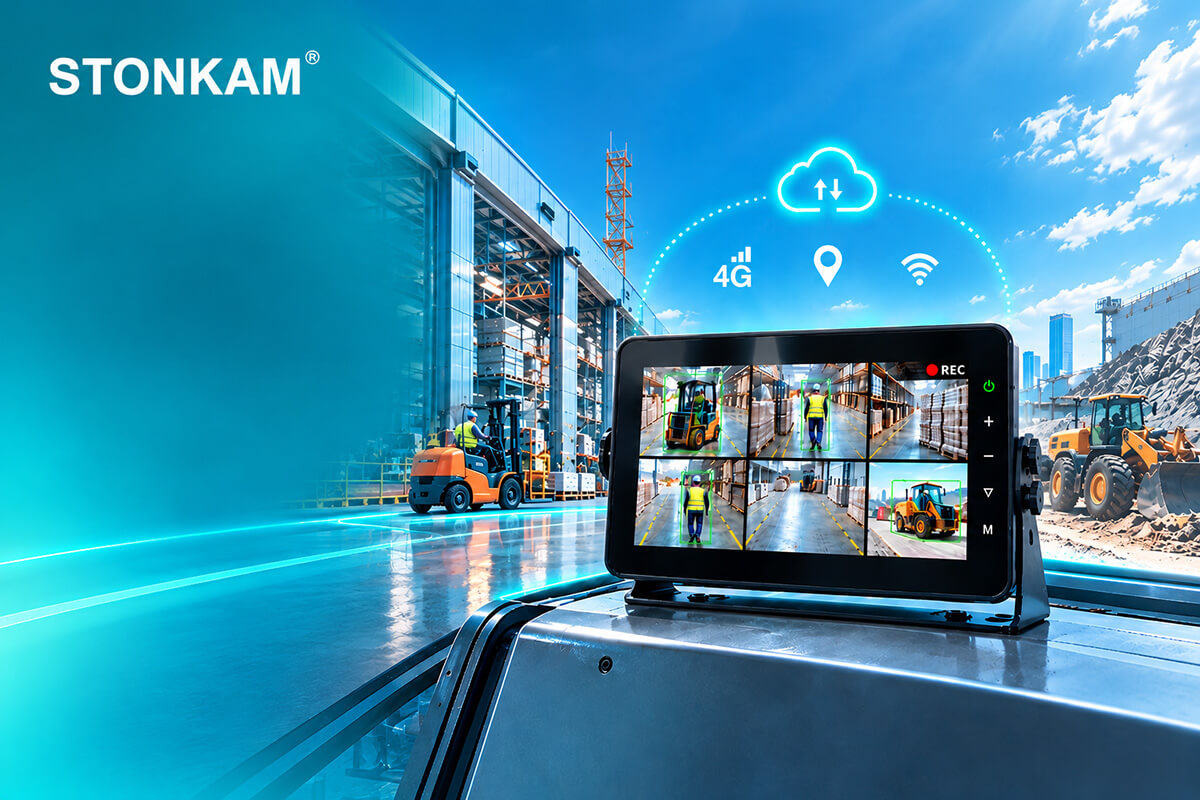
An AI MDVR (Artificial Intelligence Mobile Digital Video Recorder) is an onboard recording and intelligent analysis system installed on commercial vehicles. It supports multi‑channel camera input and video recording, and uses embedded AI algorithms to detect driver status and surrounding risks in real time. Unlike a standard MDVR, which records video for later review, an AI MDVR converts camera input into actionable events—fatigue, distraction, forward collision risk, blind‑spot intrusion—and links those events to in‑cab alerts, triggered recording and remote upload. STONKAM's AI MDVR range is organised into 4‑channel, 6‑channel and 8‑channel hardware configurations, allowing fleet operators to select the appropriate camera input capacity according to their vehicle layouts and monitoring requirements. For fleet operators evaluating an AI MDVR system, the key considerations include camera input capacity, supported AI functions and compatibility with existing fleet management platforms.
What Are the Benefits of Using an AI MDVR?
● Improved Driver Safety. DMS monitors driver status and helps fleet managers identify fatigue, distraction and other risky behaviors before they escalate into incidents. In‑cab alerts and platform events move safety management from post‑incident review to real‑time intervention and coaching.
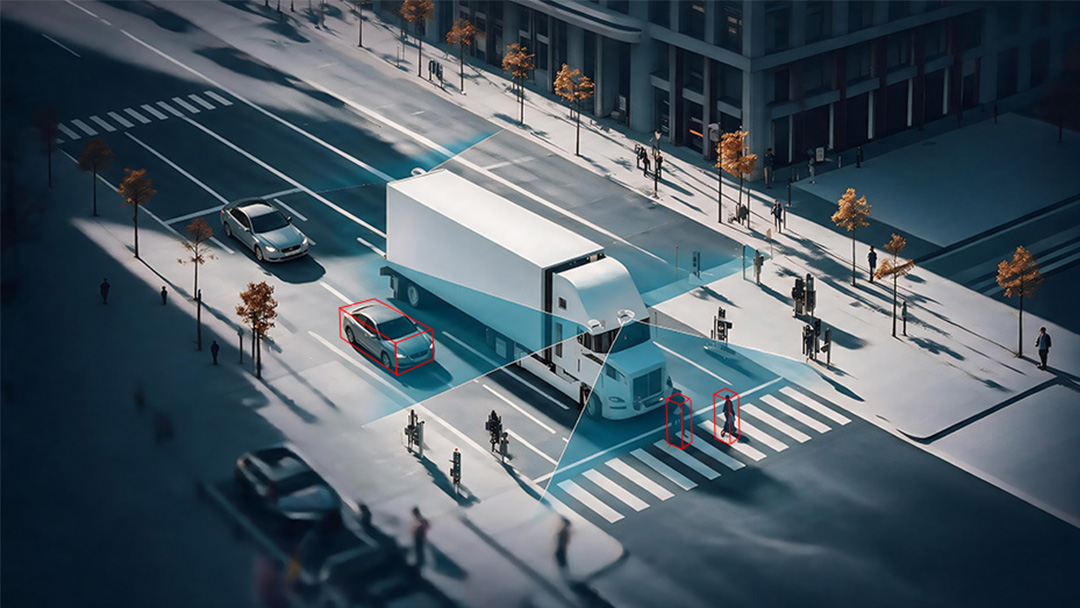
● Reduced Blind Spot Risks. BSD algorithms detect pedestrians and vehicles around the vehicle, helping drivers identify targets in blind zones during lane changes, turning and work operations. For large commercial vehicles, construction machinery and specialized trucks, BSD turns a judgment that once depended on mirrors and experience into a recordable, alert‑driven safety signal.
● Centralised Fleet Video Management. Through a fleet management platform, operators gain vehicle positioning, remote video viewing, video playback and event management without retrieving footage vehicle by vehicle. STONKAM AI MDVRs are compatible with CMSV6 and Wialon and support JT/T 808 and API integration, allowing video, location and alarm events to flow into the fleet's existing management workflow.
● Flexible Multi‑Camera Monitoring. Vehicle body structures, work zones and camera layouts vary widely. Fleets can choose a 4 channel AI MDVR, 6 channel AI MDVR or 8 channel AI MDVR according to their actual monitoring requirements. STONKAM offers the DV455/DV456 (4‑channel), DV436 (6‑channel) and DV454 (8‑channel) models, enabling vehicle‑by‑vehicle configuration without requiring a single specification across the entire fleet.
What Should You Look for When Choosing a 4/6/8‑Channel AI MDVR?
When comparing AI MDVR suppliers, buyers should also assess the technical capabilities and integration experience of each AI MDVR manufacturer. Key factors include whether the channel count matches the total camera layout, whether the supported AI functions meet vehicle safety requirements, and whether platform, protocol and API capabilities support existing fleet management integration. These factors help buyers assess not only the hardware configuration but also its suitability for long‑term fleet operations.
1. 4CH vs. 6CH vs. 8CH: Which Configuration Is Right for Your Fleet?
When comparing a 4‑channel AI MDVR, a 6‑channel AI MDVR and an 8‑channel AI MDVR, fleet operators should consider the total number of connected cameras, required AI functions and vehicle‑specific monitoring needs. The right configuration depends on both camera coverage and the capabilities of the selected model.
|
Selection Dimension |
4 Channel MDVR |
6 Channel MDVR |
8 Channel MDVR |
|
Video Input |
4× 1080P |
6× 1080P |
8× 1080P |
|
Typical Camera Allocation |
Driver DMS + forward ADAS + dual‑side BSD |
4CH combination plus side/rear, cabin or APC channels |
Multi‑zone BSD + APC + 360° AVM wide‑angle cameras |
|
Suitable Vehicles |
Box trucks, light commercial vehicles with a defined layout |
Buses, school buses, medium trucks requiring side/rear coverage |
Articulated vehicles, construction and mining machinery, multi‑zone work vehicles |
|
Selection Focus |
Confirm the AI algorithm set fits within four channels |
Confirm side/rear or APC channel headroom |
Confirm multi‑zone algorithm scheduling requirements |
A 4 channel AI MDVR is suitable for vehicles with up to four connected cameras, including both AI‑enabled and recording‑only cameras. A 6 channel AI MDVR provides additional capacity for side, rear or cabin monitoring, while an 8 channel AI MDVR supports more extensive multi‑zone coverage. All four STONKAM models support the same AI function set, so buyers should select the channel configuration according to the total number of connected cameras, vehicle layout and monitoring requirements. For a DMS BSD MDVR application, the required camera positions should also be confirmed before deployment.
2. What AI Algorithms Should an AI MDVR Support?
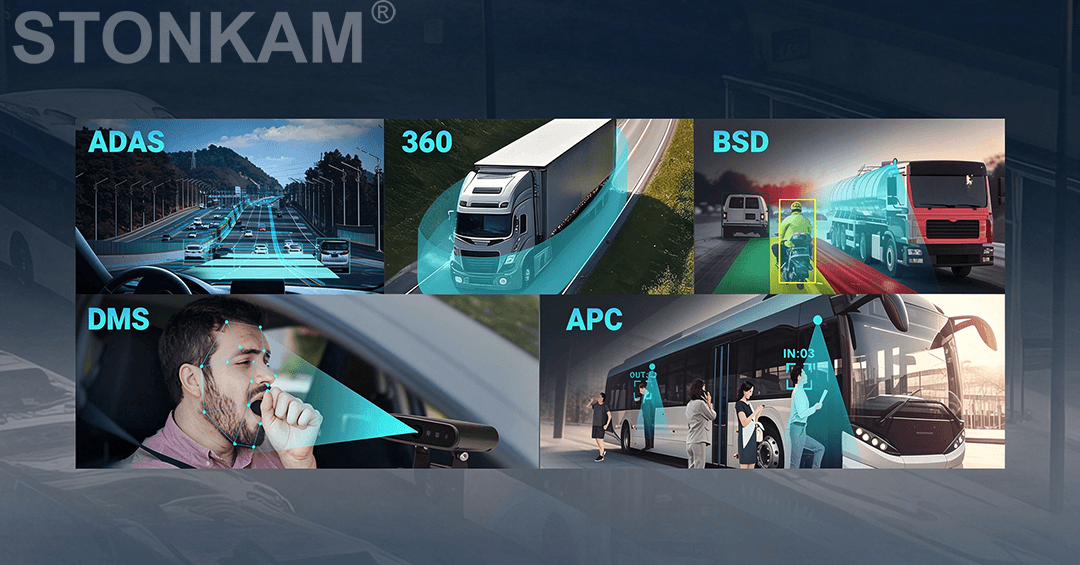
The algorithm support of an AI MDVR determines which safety functions a fleet can actually deploy. Common algorithms include:
|
AI Algorithm |
Primary Function |
|
DMS |
Driver status monitoring: fatigue, distraction, smoking, seatbelt use |
|
BSD |
Blind‑spot detection: identifies pedestrians and vehicles to reduce lane‑change, turning and work‑zone risks |
|
ADAS |
Advanced driver assistance: forward collision warning, lane departure, following‑distance alerts |
|
APC |
Passenger counting: boarding and alighting statistics for bus and coach applications |
|
360° AVM |
Surround‑view monitoring: multi‑camera stitching and panoramic display |
When selecting an AI MDVR, buyers should distinguish between the number of supported camera inputs and the AI functions available on each channel. A higher channel count does not automatically mean that more AI algorithms can run simultaneously.
STONKAM offers configurable AI MDVR solutions across its 4CH, 6CH and 8CH product range, including the DV455, DV456, DV436 and DV454. Depending on the model and configuration, these systems support AI functions such as DMS, ADAS, BSD, APC and 360° AVM. The DV436 supports multiple AI algorithms running concurrently, while the DV454 offers scenario‑based algorithm switching. Buyers should verify supported algorithm combinations and camera requirements for each model.
3. Which Fleet Management Platforms Should an AI MDVR Support?
When evaluating AI MDVR suppliers, fleet operators should look beyond channel count and product specifications. Key factors include supported AI functions, platform compatibility, protocol support and fleet management integration. For buyers sourcing a DMS BSD MDVR solution, it is also important to verify that driver monitoring and blind‑spot detection events can be correctly transmitted to the fleet platform.
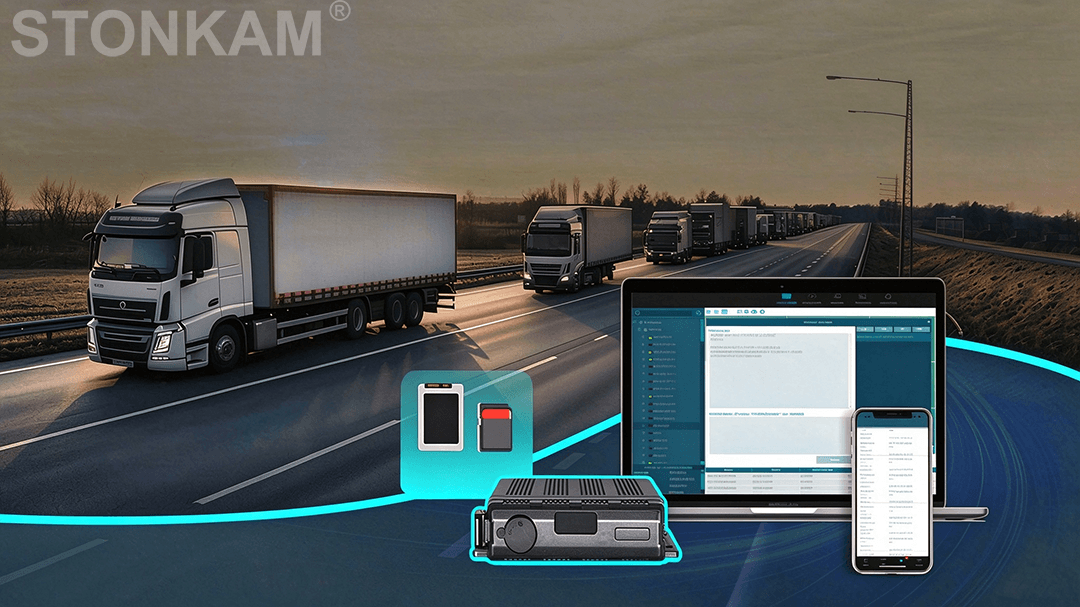
STONKAM AI MDVR solutions offer compatibility options for CMSV6 and Wialon, JT/T 808 protocol support and API interfaces for third‑party fleet management integration. Buyers should verify that alarm events display correctly, that the selected protocol meets applicable platform requirements and that API fields cover the data required by their management systems. A sample‑vehicle integration test is recommended before deployment.
For OEM MDVR projects, API availability and protocol compatibility are also important, particularly when integrating video monitoring with an OEM's existing vehicle systems or fleet management platform.
4. STONKAM 4CH, 6CH and 8CH AI MDVR Solutions Compared
|
Model |
Channels |
AI Functions |
Selection Focus |
|
4CH 1080P |
DMS, ADAS, BSD, APC, AVM |
4‑camera HD recording and AI safety monitoring |
|
|
4CH 1080P (IP69K) |
DMS, ADAS, BSD, APC, AVM |
4‑camera AI monitoring and waterproof integration |
|
|
6CH 1080P |
DMS, ADAS, BSD, APC, AVM |
Expanded camera coverage and multi‑algorithm configurations |
|
|
8CH 1080P (IP69K) |
DMS, ADAS, BSD, APC, AVM |
Multi‑zone monitoring and scenario‑based AI configurations |
For buyers looking for a DMS BSD MDVR solution, the DV455 and DV456 provide four‑channel options with different product configurations. The DV436 offers six‑channel capacity, while the DV454 supports up to eight camera inputs for vehicles requiring broader camera coverage. The appropriate model depends on the total number of connected cameras and the specific vehicle configuration.
AI MDVR Buyer Checklist
|
Check Item |
Requirement Description |
|
Camera Channels |
4CH, 6CH or 8CH based on monitoring needs. |
|
AI Functions |
DMS, BSD, ADAS and simultaneous operation. |
|
Video Recording |
Resolution, storage and event recording. |
|
Fleet Integration |
CMSV6, Wialon, protocols and APIs. |
|
Vehicle Compatibility |
Interfaces, environmental protection and OEM customization. |
What Are the Common Applications of AI MDVR Systems?
A commercial vehicle MDVR system should be configured according to the vehicle's operating environment, camera layout and fleet management requirements. Logistics trucks, buses and construction machinery may therefore require different channel configurations and AI functions.
|
Fleet Application |
Typical Channel Configuration |
Core AI Requirements |
|
Logistics and Transportation Trucks |
4CH / 6CH |
DMS, BSD, ADAS |
|
Public Transportation |
4CH / 6CH |
DMS, BSD, APC |
|
Construction and Mining Machinery |
6CH / 8CH |
DMS, BSD, 360° AVM |
|
Specialised Commercial Vehicles |
Based on camera layout |
Based on operational requirements |
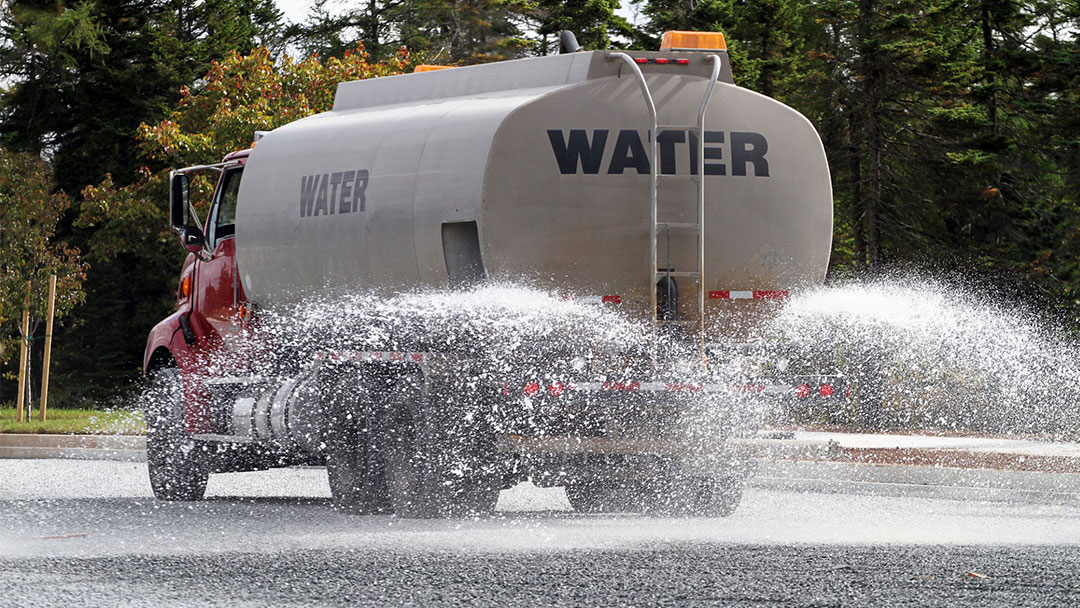
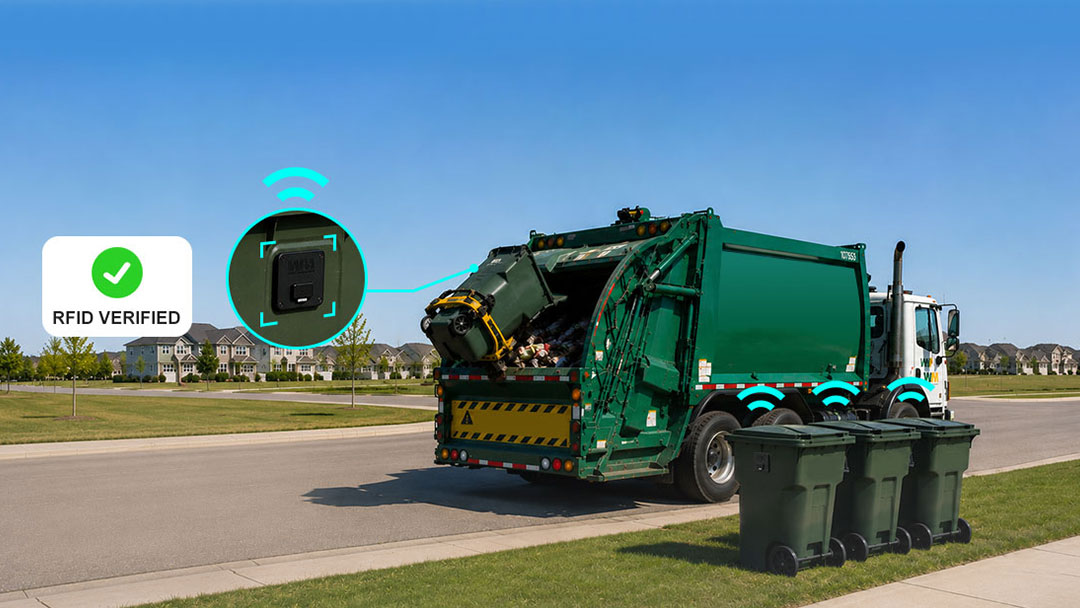
Logistics fleets focus on driver fatigue monitoring and lane‑change blind‑spot coverage. Public transportation needs simultaneous coverage of the driver, doors and cabin, with APC providing passenger counting. Construction machinery operates across low‑speed precision work and high‑speed travel, where an 8 channel MDVR can support scenario‑based algorithm switching. For specialised commercial vehicles, channel count should be derived from the actual body structure and work‑zone layout rather than a default product tier.
Case Study: AI MDVR Deployment for an Australian Emergency Vehicle Fleet
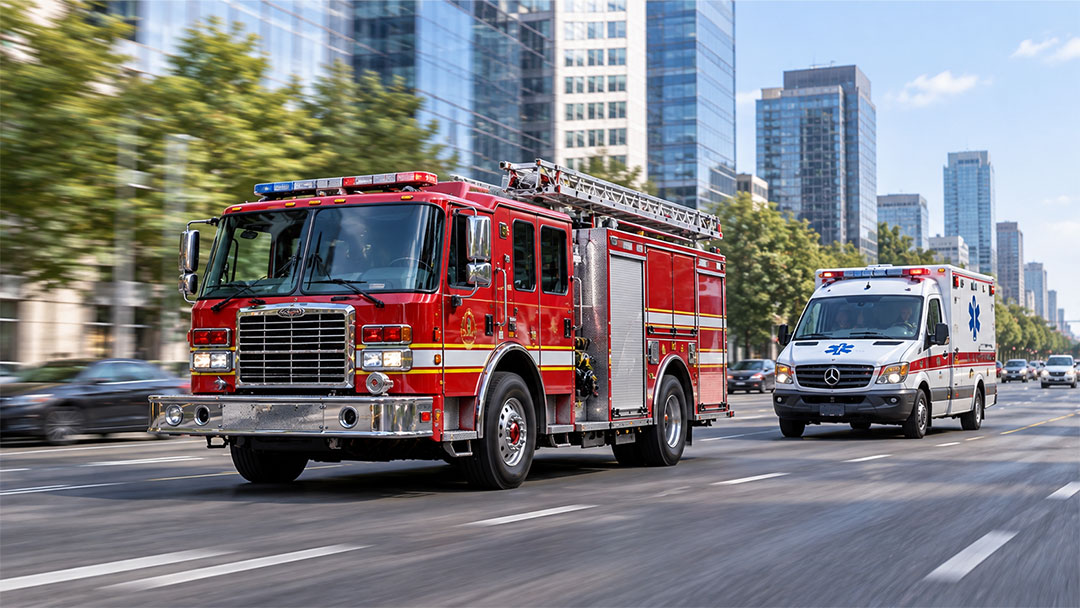
STONKAM supplied 1,000 AI MDVR systems for an Australian emergency vehicle project involving ambulances and fire trucks.
The solution used 5–6 channels of HD cameras to monitor multiple areas around and inside the vehicles. It also supported encrypted video storage, remote live viewing, video playback and integration with the customer's existing fleet management platform.
Selection Takeaway: This project demonstrates why camera coverage, secure video evidence and platform integration should be evaluated together when selecting an AI MDVR. For emergency fleets requiring five or six camera inputs, a four‑channel device alone would not meet the full video input requirement.
The appropriate MDVR model and system configuration depend on the actual number of cameras, safety functions and integration requirements.
Conclusion: How to Choose the Right AI MDVR for Your Fleet?
Choosing the right AI MDVR requires balancing camera channel capacity, AI safety functions, video recording requirements and fleet platform integration.
STONKAM offers 4CH (DV455/DV456), 6CH (DV436) and 8CH (DV454) AI MDVR solutions for different commercial vehicle monitoring needs. OEMs, system integrators and fleet operators can select a suitable model based on camera coverage, required AI functions, operating conditions and system integration needs.
Before deployment, buyers should verify camera allocation, supported AI algorithm combinations and fleet platform compatibility for their selected configuration.
-
STONKAM is one commercial vehicle AI MDVR manufacturer offering 4-channel (DV455/DV456), 6-channel (DV436) and 8-channel (DV454) solutions. The product lineup supports configurable AI safety functions including DMS, BSD and ADAS, with fleet integration options for CMSV6, Wialon, JT/T 808 and third-party APIs. Buyers should verify simultaneous AI operation, camera requirements and supported platform functions for each model.
-
A 4-channel AI MDVR supports up to four connected camera inputs, including AI-enabled and recording-only cameras. A 6-channel AI MDVR provides additional capacity, while an 8-channel AI MDVR supports more extensive multi-zone monitoring. Buyers should count all camera inputs before selecting a configuration.
-
Yes, selected STONKAM AI MDVR models support multiple AI functions based on their hardware and algorithm configurations. DMS requires a dedicated driver camera, while BSD relies on side or rear camera inputs. Buyers should confirm the supported algorithm combinations and camera configurations for each model before deployment.
-
STONKAM AI MDVRs are compatible with CMSV6 and Wialon, support JT/T 808 and provide Open API. Verify platform events, protocol fit and API fields separately, then test on a sample vehicle.
-
STONKAM offers 4-channel (DV455/DV456), 6-channel (DV436) and 8-channel (DV454) AI MDVR models. Buyers should select a model based on the number of connected cameras, required AI safety functions, environmental conditions and fleet platform integration needs. Specific AI algorithm combinations and system compatibility should be verified for each model.