


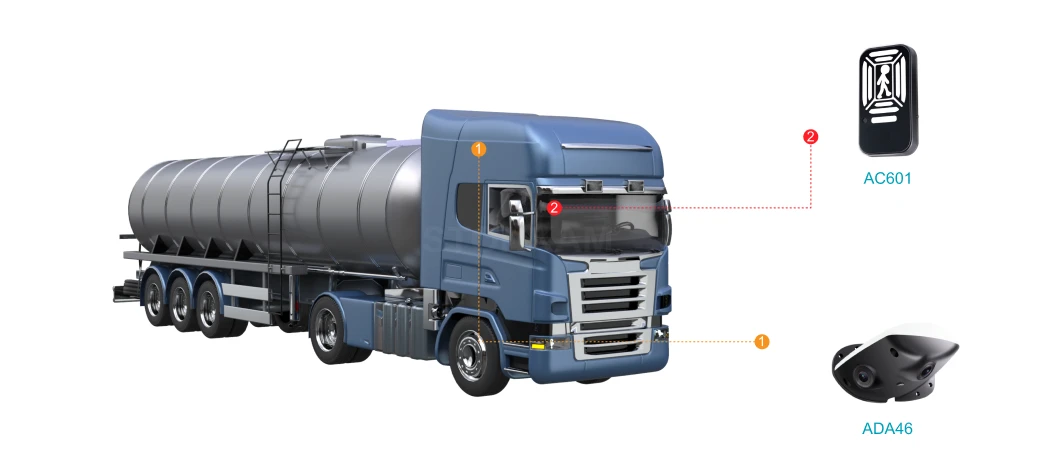
ADA46, AC601
UN ECE R151 Compliant Blind Spot Information System
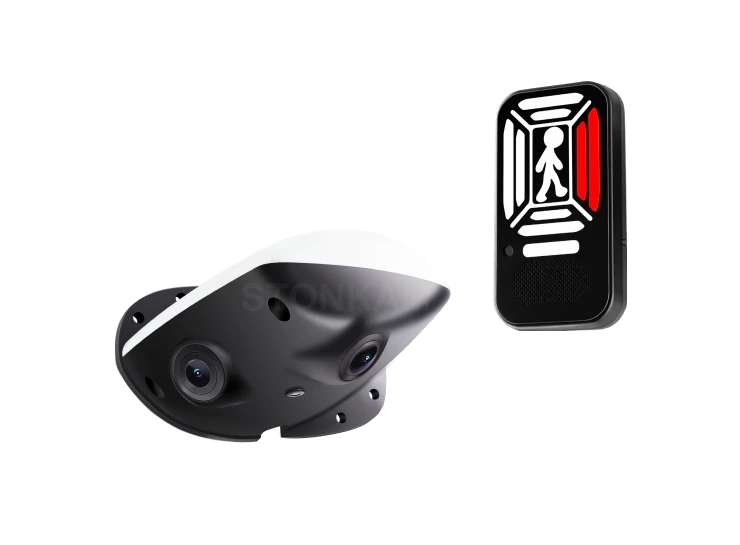
STONKAM UN ECE R151 Compliant Blind Spot Information System consists of an AI-powered binocular blind spot detection camera and an alarm, designed to monitor cyclists in blind spots alongside commercial vehicles. When a target enters a preset risk area, the system provides graded visual and audible alerts based on the vehicle's operating conditions, helping drivers identify potential hazards and improve road safety.


Product Features
-
Designed to meet the relevant requirements of UN ECE R151, STONKAM UN ECE R151 Compliant Blind Spot Information System helps commercial vehicles detect cyclists in the blind spot on the passenger side of the vehicle. Depending on specific requirements, it can also identify pedestrians, vehicles, and other road users, supporting safe and compliant commercial vehicle operations.
-
The system provides graded alerts based on target entry into the blind spot and vehicle operating conditions such as turning. Indicator lights and a buzzer promptly alert drivers to potential risks alongside the vehicle, helping them take evasive action earlier.
-
Featuring a binocular blind spot detection camera design combined with AI-based pedestrian/vehicle detection technology, the system identifies cyclists in the blind spot on the side away from the driver's position. It helps drivers receive timely information about potential blind spot risks and enhances protection for vulnerable road users.
Product Highlight

Compliance with R151 Requirements
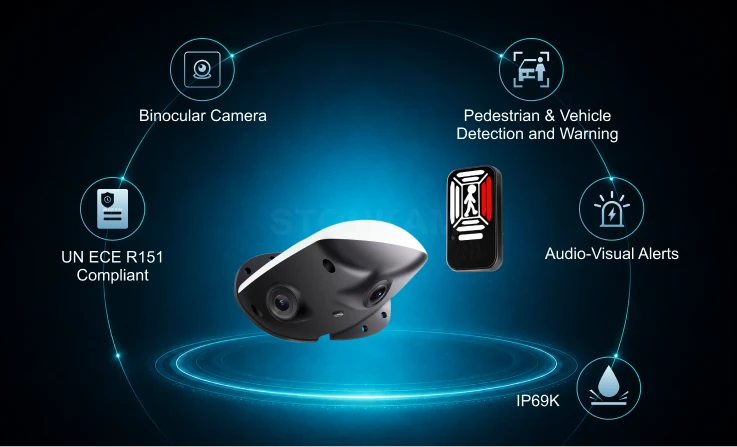
Designed for UN ECE R151 (BSIS) applications, the system detects cyclists in the passenger-side blind spot and provides timely information and warning alerts based on vehicle operating conditions.
- Dual-Lens Coverage: A telephoto lens and wide-angle lens cover detection areas at different distances alongside the vehicle.
- AI Road User Detection: Identifies cyclists and, depending on requirements, pedestrians, vehicles, and other road users.
- Blind Spot Risk Alerts: Provides corresponding alerts when a potential collision risk is detected in the vehicle's side blind spot.

R151 Information and Warning Strategy
The system provides information and warning signals based on target status and vehicle operating conditions, in accordance with R151 requirements.
- Information Signal: When a cyclist potentially affected by vehicle turning is detected on the near side, the warning indicator stays yellow until the target leaves the blind spot.
- Warning Signal: When the collision risk increases, the warning indicator stays red and the buzzer sounds until the danger is cleared.
Applications
STONKAM UN ECE R151 Compliant Blind Spot Information System is suitable for trucks and large commercial vehicles and is designed to support blind spot monitoring and warning requirements related to UN ECE R151.
Frequently asked questions
-
R151 is one of the vehicle safety regulations established by the United Nations Economic Commission for Europe (UNECE), including requirements related to Blind Spot Information Systems. The UN ECE R151 Compliant Blind Spot Information System is designed to monitor vulnerable road users in the vehicle's near-side area and provide alerts to the driver when a target enters the relevant area.
-
The system uses an AI camera with a telephoto and wide-angle dual-lens design, with each lens responsible for monitoring a different range. The telephoto lens covers a farther area behind the vehicle, while the wide-angle lens covers the area in front of and alongside the vehicle. The two lenses provide an overlapping detection range, helping reduce detection gaps when targets move from the rear area toward the front.
-
The UN ECE R151 Compliant Blind Spot Information System uses telephoto and wide-angle lenses to cover different monitoring ranges. The telephoto lens can capture video covering approximately 35 meters toward the rear from the front of the vehicle, while the wide-angle lens covers approximately 10 meters in front of the vehicle and at least 5 meters toward the rear from the front of the vehicle.
-
Testing has verified that the UN ECE R151 Compliant Blind Spot Information System can identify adult cyclists, small bicycle riders, adult pedestrians, and child pedestrians. The smallest verified detection target to date is a child pedestrian.
-
When the UN ECE R151 Compliant Blind Spot Information System detects a target entering the vehicle's blind spot, it provides an information alert. The yellow warning light on the alarm remains steadily illuminated until the relevant target leaves the blind spot.
-
When the UN ECE R151 Compliant Blind Spot Information System detects that the vehicle's turn signal is activated and the corresponding operating conditions are met, while a target enters the relevant risk area, the alarm's red warning light remains steadily illuminated and the buzzer sounds until the dangerous condition is cleared.
-
When ambient light falls below 15 Lux, extreme weather such as heavy rain or snow occurs, the camera lens is contaminated by ice, snow, mud, dust, or other substances, or an abnormal camera power interruption prevents normal operation, the UN ECE R151 Compliant Blind Spot Information System enters a fault state and the yellow fault indicator on the alarm remains steadily illuminated.
We look forward
to hearing from you!
to hearing from you!
Leave your contact info here and our team will get back to you soon.
With STONKAM you can:
- Comply with industry rules and regulations.
- Identify risks and automate driver coaching.
- Improve visibility and automate operations.
- IATF 16949:2016
- UN ECE R151
- UN ECE R156
- ISO 9001:2015
- UN ECE R158
- UN ECE R10
- ISO 26262:2018
- UN ECE R159
- UN ECE R118
- ISO/SAE 21434:2021
- UN ECE R46
- EU 2021/1341
- GB 15084-2022
- UN ECE R155
- EU 2023/2590
STONKAM® serves business customers only. Please use a company email and provide your country/region. Non-business inquiries may not be processed.
* indicates required
fields
-
Model No.
-
Name *
-
Company Name *
-
Company Website *
-
Country *
-
Email *
-
WhatsApp/Phone *
-
Message *
-

